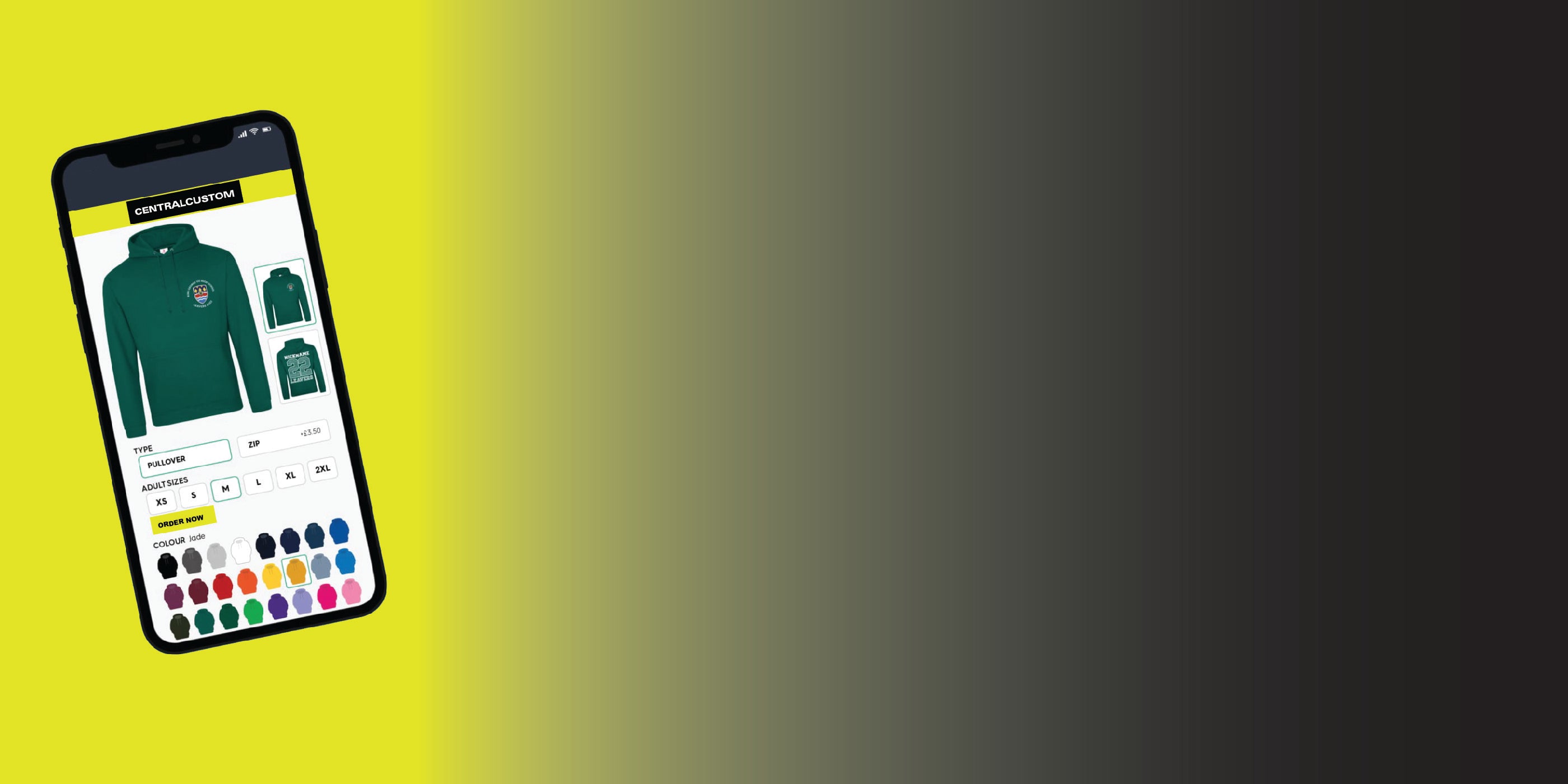
Matching shirts make a team. Names and numbers make it feel official. Whether you run a Sunday league football side, a netball club or a junior cricket squad, personalising your kit is one of the cheapest ways to lift how professional your club looks and feels — and it solves the eternal kit-bag problem of whose shirt is whose. This guide covers what to add, how it's applied, what it costs, and how to organise it all without losing your evenings to a spreadsheet.
What you can add to a team kit
Squad numbers are the classic. A large number on the back (and often a small one on the front or shorts) is standard for football, netball, hockey and basketball. Player names above the rear number give the full professional look, and for junior teams they help coaches and parents on busy match days. Initials are the quiet option — small letters on the chest, hem or collar — popular where a full name feels too much, and standard on cricket whites and training wear. Finally, role labels like COACH, MANAGER or PHYSIO on jackets and hoodies make your touchline team easy to spot.
How names and numbers are applied
Heat-applied vinyl and DTF transfers
The go-to method for names and numbers. Letters and digits are cut from flexible vinyl, or printed as direct-to-film transfers, and heat-pressed onto each garment. It's sharp, durable, and — crucially for club kit — each shirt can be different without extra setup cost per design. Modern transfers stretch with the fabric and survive seasons of washing when cared for properly. This is what we use for the vast majority of team kit personalisation at CentralCustom.
Embroidery
Embroidered initials look smart and last the life of the garment, which makes them ideal for polos, midlayers and cricket whites. Embroidery isn't usually used for large rear numbers — it's heavier, and on lightweight match shirts it can pucker the fabric — but for small text it's the premium choice.
Sublimation
If your club is buying fully sublimated kit (where the whole design is dyed into the fabric), names and numbers can be built into the design itself. They'll never peel or crack, but the details are fixed at manufacture — so late squad additions mean a new shirt, not a quick press. Worth it for established clubs; less flexible for squads that change every season.
What does it cost?
As a rule of thumb in the UK, expect a few pounds per shirt for a rear number, slightly more for a name-and-number set, and a small charge for embroidered initials. On a typical squad order the personalisation usually adds somewhere between 10% and 20% to the kit cost. Two things keep the price down: ordering everything in one batch (pressing twenty shirts in one run is far cheaper than twenty separate jobs) and keeping your lettering style consistent season to season so nothing needs re-setting. If you're weighing up the wider budget, our guide to adding sponsor logos to your team kit covers how sponsorship can offset the whole order.
Check your league's rules first
Before you commit, check your league handbook. Many grassroots football leagues require a fixed number range, contrasting number colours, or a minimum number height (often around 25cm for the rear number). Netball leagues typically require position bibs rather than numbers, so personalisation tends to go on training wear instead. Junior leagues sometimes discourage full names on shirts for safeguarding reasons — initials are a widely accepted alternative. Five minutes checking now saves reprinting a full squad later.
Collecting names, numbers and sizes without the chaos
The slowest part of any personalised kit order is rarely the printing — it's the chasing. A few things that genuinely help:
Set a hard deadline and tell the squad the order goes in on that date with or without them. Stragglers can join a top-up order later.
Use one collection sheet with exactly four columns: player name as it should appear, number, garment size, and quantity. Ambiguity ("L or maybe XL?") is where mistakes breed.
Run a sizing session at training with sample garments if you can — sizes vary between brands, and swapped-out personalised shirts can't go back on the shelf. Our size guide helps for anyone who misses it.
Lock spelling before approval. Read every name back. "Steven with a V" is a cliché because it happens constantly.
Making personalised kit last
Wash personalised shirts inside out at 30°C, skip fabric softener (it degrades both transfers and wicking fabrics), and never iron directly over names or numbers. Dry them on a line rather than a radiator — direct heat is what lifts vinyl edges. Treated well, heat-applied names and numbers will comfortably see out several seasons.
Frequently asked questions
Can every shirt in the order be different?
Yes — that's the point of heat-applied personalisation. Different names, numbers and sizes in one order is completely standard and doesn't need separate setup for each shirt.
Can you add a name to a shirt we already own?
Usually, if the fabric is suitable and the garment is clean and in good condition. It's always easier (and neater) to personalise garments before first wear, though.
What happens when a new player joins mid-season?
We keep your club's lettering style, colours and layout on file, so a single new shirt can be produced to match the rest of the squad exactly.
Names or initials for junior teams?
Many junior clubs choose initials or first names only. Check your league's guidance — policies vary, and initials are the safe default.
Ready to personalise your club's kit? Browse our teamwear range or request a quote — send us your squad list and we'll handle the rest.