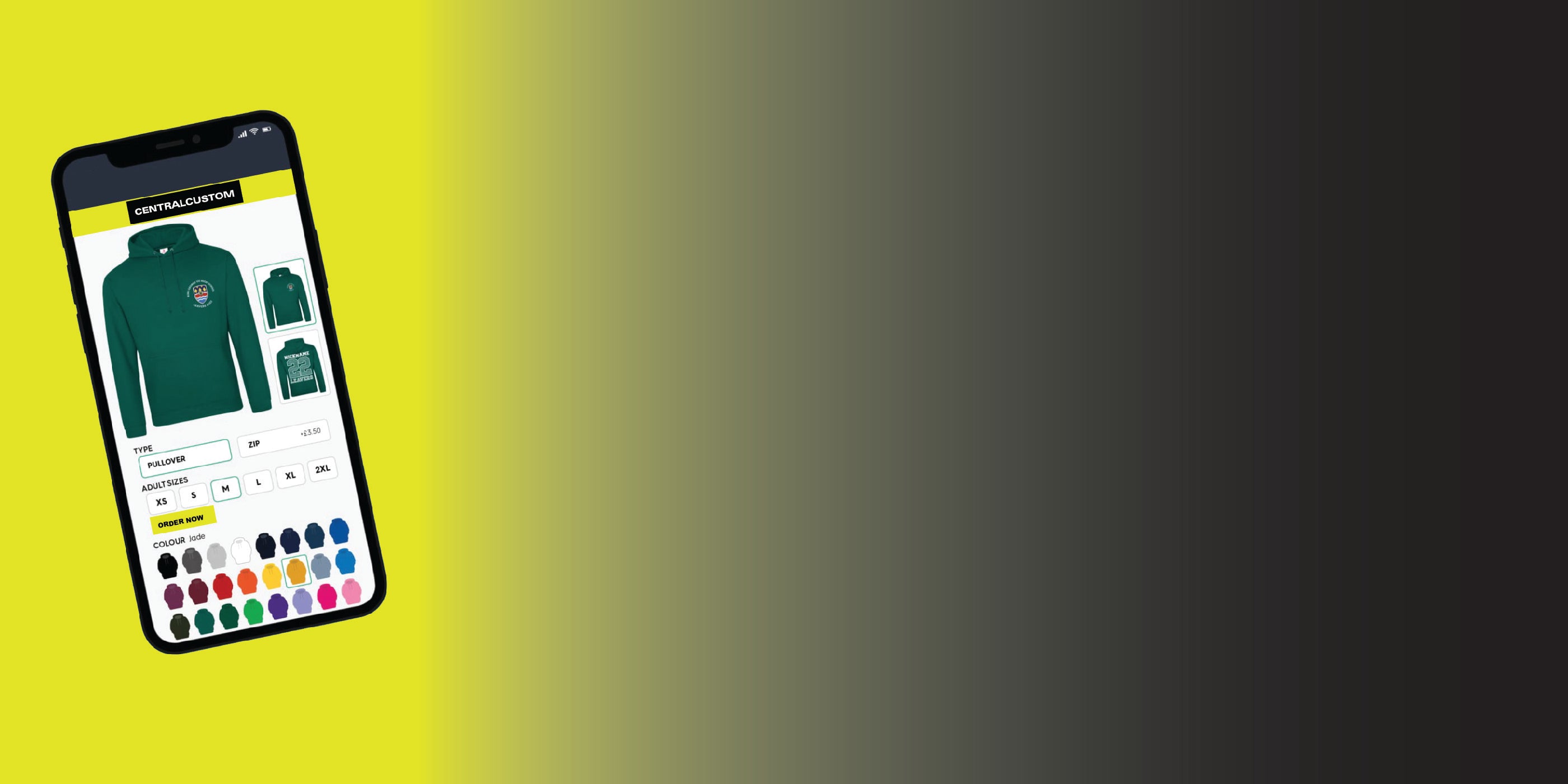
Quick answer: A minimum order quantity (MOQ) is the smallest number of units a supplier will decorate in one production run. Most UK promotional suppliers set one because the setup work — burning screens, digitising a logo, prepping print files, changing machines over — costs the same whether you order ten units or a thousand. Embroidery and digital transfer printing carry the lowest practical minimums, which is why CentralCustom can brand a single mug, bottle, bag or polo with no minimum order at all.
Ask a small UK business why it has never ordered branded promotional products and the answer is rarely that it did not want any. It is almost always the same sentence: the minimum order was 250 and we only needed 30.
Minimum order quantities are real and there are sensible reasons behind them. But they are not a law of physics, and they vary enormously depending on how the item is decorated. Here is what is actually driving the number on your quote, and how to order promotional merchandise in small quantities without paying a silly premium for the privilege.
Why suppliers set a minimum order at all
Setup costs do not scale down
Every branded item carries a fixed cost before a single unit is produced. A screen print needs a screen made for each colour in the design. An embroidery job needs the logo digitised into a stitch file that tells the machine where to put every stitch. A full-colour transfer needs artwork prepping and colours matching. That work takes roughly the same time for an order of twelve as for an order of twelve hundred, so on a small order it lands on very few units and the per-item price looks alarming. Setting a minimum is the blunt way suppliers avoid having that conversation.
Stock arrives in cartons, not singles
The second reason is warehousing. Blank mugs, bottles and keyrings are imported in sealed cartons, often 36, 48 or 72 to a box. A supplier who holds no stock has to break a carton to fill your order of twenty and then live with the remainder. Suppliers who hold stock themselves, or who buy from UK distributors that pick single units, can go far lower without it hurting.
What a minimum order actually costs you
An MOQ does not just raise the invoice. It changes what you end up with.
- Overordering. Buying 250 tote bags so you can hand out 60 at a trade show is not a bargain. It is 190 bags in a cupboard.
- Storage and handling. Branded stock has to live somewhere, and somebody has to count it, move it and remember it exists.
- Obsolescence. Logos get refreshed, straplines change, staff leave, and anything printed with a year or an event name has a shelf life measured in months.
The cheapest unit price in the world is expensive if you bin half of it. Work backwards from what you will realistically hand out in the next twelve months, then find a supplier who will produce that number.
The decoration method sets the real minimum
If you remember one thing from this guide, make it this: the minimum is a property of the process, not the product.
| Method | Setup involved | Practical minimum | Best for |
|---|---|---|---|
| Embroidery | Logo digitised once, then kept on file | One unit | Polos, hoodies, caps, fleeces, bags |
| DTF and digital transfer | Artwork prepped, no screens needed | One unit | T-shirts, full-colour designs, short runs |
| Screen printing | One screen per colour in the design | Higher — economics improve sharply with volume | One or two-colour designs in bulk |
| Pad print or laser on hard goods | Jig or plate made per item shape | Carton quantities are common | Pens, keyrings, bottles, mugs |
So no minimum order is not marketing spin. It is simply what happens when the decoration method has a one-off setup and the blank items can be bought singly. It also explains why the same supplier might happily embroider one jacket for you and quote 250 on a printed keyring.
Five ways to order promotional products in small quantities
- Choose items decorated by embroidery or digital transfer. Anything textile — polos, hoodies, caps, tote bags — can usually be done in ones and twos. Hard goods with moulded shapes are where the minimums bite.
- Order one as a sample first. A single branded item costs a fraction of a wrong bulk order, and it settles arguments about colour and logo size before money is committed.
- Put several items under one logo setup. If your logo is digitised once, it can go on printed mugs, polos and bags in the same order. A mixed order of 40 items across four products is often far more useful than 250 of one thing.
- Leave dates and event names off. Evergreen branding can be handed out for years. A design that says 2026 is dead stock in January.
- Ask where the price break is, not just what the minimum is. A good supplier will tell you the quantity at which the unit price genuinely drops. Sometimes it is 25 rather than 250, and knowing that changes the order.
How CentralCustom handles small orders
We work with no minimum order. Brand one item or a thousand — the difference shows up in the unit price, not in whether we will take the job. Every order gets a free digital proof before anything is produced, so you see your logo on the item and approve it first. Your logo setup is kept on file, so a reorder in six months matches the first batch instead of drifting a shade. Quotes come back within one working day, and orders are typically dispatched 7 to 14 working days after proof approval.
If you are not sure which items suit a small run, it is worth reading our guide to choosing promotional products that get used rather than binned, or browsing the corporate gifts range if the order is for clients and staff. Otherwise send your artwork and the number you actually need to promo@centralcustom.co.uk and we will tell you honestly which processes make sense at that quantity.
Frequently asked questions
What does MOQ mean?
MOQ stands for minimum order quantity — the fewest units a supplier will accept for a single production run of a given item and decoration method.
Can I order just one branded mug or polo shirt?
With CentralCustom, yes. There is no minimum order. The unit price on a single item will be higher than on a batch, because the setup cost sits on one unit rather than fifty, but the order will be accepted and produced properly.
Is it cheaper per unit to order more?
Almost always. Setup is a fixed cost, so it dilutes as quantity rises, and blank items often have their own price breaks. The useful question is where those breaks fall for your specific item, which is worth asking before you decide on a number.
Do I pay a setup fee every time I reorder?
Not for repeat work on the same logo. Once your artwork has been digitised or prepared, we keep the setup on file so reorders match the original and do not repeat that cost.
What is a realistic minimum for screen printing?
Screen printing needs a screen per colour, so it rarely makes financial sense in very small numbers. For short runs we would normally recommend digital transfer or embroidery instead and reserve screen printing for larger batches where its cost advantage is real.